

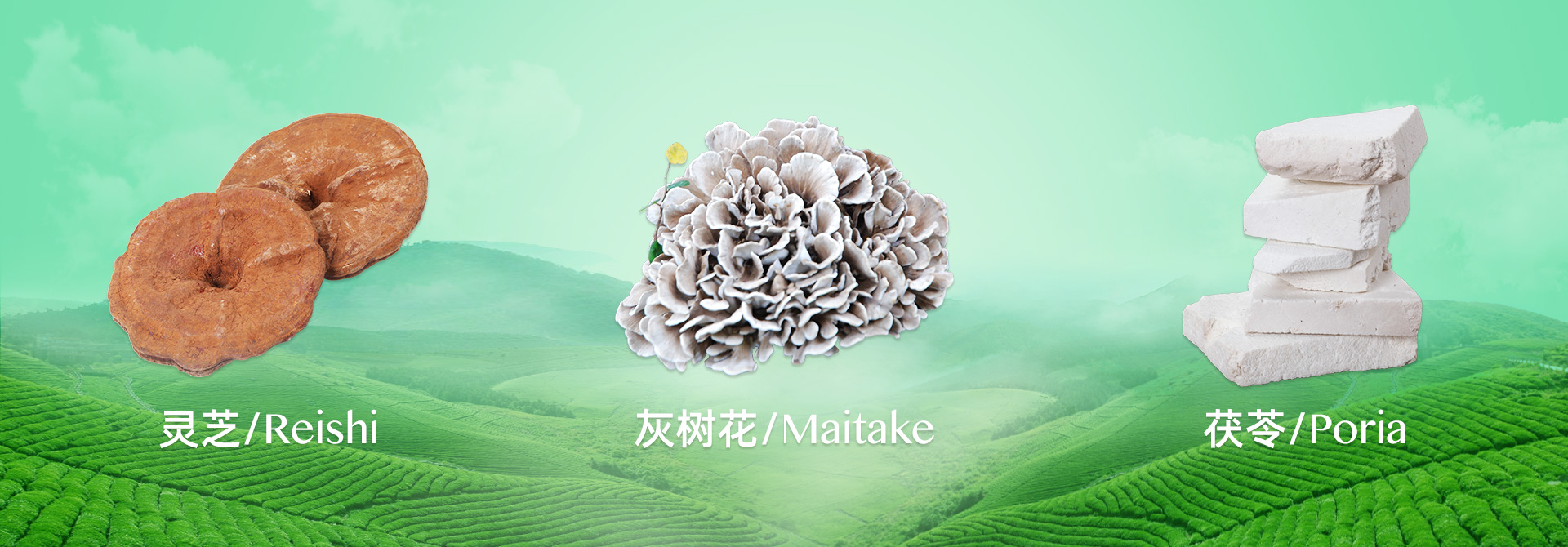

Maitake, commonly known as Grifola frondosa, is a fungus that is used both for food and medicine. It often grows wild around chestnut trees in summer and autumn. The fruit body is fleshy, with short stalks and coral-like branches, overlapping into clumps. Its appearance is graceful and cascading like chrysanthemums; its smell and fragrance are overflowing, refreshing; its meat is crisp, tender and refreshing, and it will never tire of eating. Its nutrition has good health effects and high medicinal value. In recent years, as a health food, it has become popular in Japan, Singapore and other markets.
1 nutrition
Grifola frondosa is a kind of wood-rot fungus. Like other edible fungi, it needs to absorb nutrients from the outside during the growth process. The requirements for nutrients such as carbon sources and nitrogen sources are not much different from those of shiitake mushrooms and slippery mushrooms. During the growth of Grifola frondosa, more nitrogen source substances can be added appropriately.
2 temperature
In nature, Grifola frondosa grows mostly in summer and autumn. Its hyphae can grow in a wide temperature range, and can grow at 3-32 °C. Similar to common edible fungi, the most suitable temperature is 20~25°C. Grifola frondosa is more resistant to high temperature and will not stop growing at 32°C, but the mycelium is weak at this time. The temperature for forming primordium of Grifola frondosa is generally 18~22℃, while the fruiting body can grow at 10~25℃, and the most suitable growth temperature is 15~20℃. If the temperature is low, the fruiting body grows slowly; when the temperature is high, the fruiting body grows faster.
3 Moisture and air humidity
The moisture (water content) in the Grifola frondosa culture medium is generally controlled at 60%~65%. During the mycelial growth stage, the relative air humidity is generally 60%~65%, which is basically the same as the water content of the culture medium. On the one hand, this can prevent the water loss in the culture medium, and on the other hand, it can also prevent the tampon or sealing paper from being damp and moldy .
During the growth and development stage of the fruiting bodies, the relative humidity of the air should be kept at 85% to 95%, preferably 90%. If the relative humidity of the air is lower than 80%, the primordia of the fruiting body will dry up and die; if the relative air humidity is too high, the fruiting body will easily rot.
4 lighting
Grifola frondosa does not have strict requirements on light during the growth stage of mycelium. Under dark conditions, mycelium grows faster. However, if there is no light stimulation, it is not easy to form a thick base of fruiting bodies; when the thick base is formed, there is no scattered light irradiation , the primordia will not turn gray-black, and the fruiting body will not grow normally. The fruiting bodies of Grifola frondosa can differentiate and grow normally only under normal light conditions. Insufficient light makes it difficult to differentiate the fruiting body, the cap is deformed, the color is whitish, and the shape of the flower is abnormal.